 Work, Energy and Power (Work, Work-Energy Theorem and Potential Energy)Contact Number: 8527521718Work, Energy and Power (Work, Work-Energy Theorem and Potential Energy)Contact Number: 8527521718
Two springs of spring constants k and 3k are stretched separately by the same force. The ratio of potential energy stored in them respectively, will be:
| 1. | 3: 1 | 2. | 9: 1 |
| 3. | 1: 3 | 4. | 1: 9 |
A body of mass \(0.5\text{ kg}\) thrown vertically upward with \(20\text{ m/s}\) reaches a maximum height of \(16\text{ m}.\) The amount of energy dissipated by the air drag acting on the ball during the ascent is:
1. \(20\text{ J}\)
2. \(10\text{ J}\)
3. \(4\text{ J}\)
4. \(8\text{ J}\)
What is the work done by the gravitational force on block \(A\) during the first \(2\) s after the blocks are released? (assume the pulley is light)

1. \( 240 ~\text J\)
2. \( 200 ~\text J\)
3. \(120 ~\text J\)
4. \( 24 ~\text J\)
A weight 'mg' is suspended from a spring. The energy stored in the spring is U. The elongation in the spring is:
1.
2.
3.
4.
The energy required to accelerate a car from rest to 30 m/s is E. The energy required to accelerate the car from 30 m/s to 60 m/s will be:
| 1. | E | 2. | 2E |
| 3. | 3E | 4. | 4E |
A block is carried slowly up an inclined plane. If \(W_f\) is work done by the friction, \(W_N\) is work done by the reaction force, \(W_g\) is work done by the gravitational force, and \(W_{ex}\) is the work done by an external force, then choose the correct relation(s):
1. \(W _N + W _f + W _g + W _{ex} = 0\)
2. \(W _N = 0\)
3. \( W _f + W _{ex} = - W _g\)
4. All of these
The position of a particle \((x)\) varies with time \((t)\) as \(x = (t - 2)^2\), where \(x\) is in meters and \(t\) is in seconds. Calculate the work done during \(t=0\) to \(t=4\) s if the mass of the particle is \(100~\text{g}.\)
1. \(0.4~\text{J}\)
2. \(0.2~\text{J}\)
3. \(0.8~\text{J}\)
4. zero
A spring is attached to the ceiling of a room. A block of mass m is hooked to the spring and released. In static condition (when block stops after a long time) if U is the loss of potential energy of the block, then the elastic potential energy stored in the spring will be:
(1) -U
(2) U
(3)
(4) 4U
An object of mass \(m=1.5\) kg is acted upon by the force as shown in the figure that varies with the position of the object as shown. If the object starts from rest at a point \(x =0,\) then what is its speed at \(x = 50\) m?

1. \(20\) m/s
2. \(25\) m/s
3. \(15\) m/s
4. \(17\) m/s
The work done by a person in carrying a box of mass 10 kg to a vertical height of 10 m is 4900 J. The mass of the person is:
1. 40 kg
2. 60 kg
3. 50 kg
4. 55 kg
A particle is displaced from point P(1, 1)m to Q(4, 3)m by applying force N. The work done by to move the particle from point A to B is:
(1) 25 J
(2) 20 J
(3) 17 J
(4) J
A rigid body of mass m is moving in a circle of radius r with constant speed v. The force on the body is and is always directed towards the center. The work done by this force in moving the body over half the circumference of the circle is:
1.
2.
3. Zero
4.
A cord is used to vertically lower a block of mass m by a distance d at a constant downward acceleration of . The work done by the chord on the block will be:
1. mgd
2. -mgd
3. mgd
4. -mgd
The work done in increasing the length of a massless spring from its natural length 15 cm to 15.1 cm is 20 J. Work done in increasing the length from 15.1 cm to 15.2 cm will be:
| 1. | 20 J | 2. | 40 J |
| 3. | 60 J | 4. | 80 J |
A position dependent force F = 7 - 2x + 3 (N) acts on a body of mass 2 kg and displaces it from x = 0 to x = 5 m. The work done (in joules)
(1) 70
(2) 270
(3) 35
(4) 135
The displacement x in the metre of a particle of mass 1 kg moving in one dimension under the action of a force is related to the time t in seconds by equation . Work done by this force in the first 4 seconds is:
(1) 32 J
(2) 3 J
(3) 16 J
(4) 8 J
Four situations are shown in the following options. In each situation, planes are equally rough and the block begins with the same speed and slides until the kinetic frictional force has stopped it. In which of the following cases increase in thermal energy due to sliding is least?
| 1. |  |
2. |  |
| 3. | 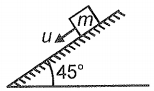 |
4. | 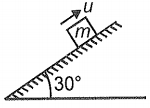 |
A block of mass m is placed in an elevator moving down with an acceleration . The work done by the normal reaction on the block as the elevator moves down through a height h is:
1.
2.
3.
4.
A fruit of mass m dropped from the height h of a tree. If it hits the ground with a speed of v m/s, then work done by the resistive force is:
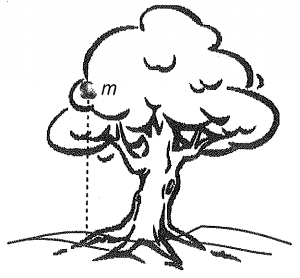
1. -mgh
2.
3.
4.
A ball is released from the top of a tower. The ratio of work done by the force of gravity in the first, second and third seconds of the motion of the ball is:
(1) 1: 2: 3
(2)
(3) 1: 3: 5
(4) 1: 5: 3